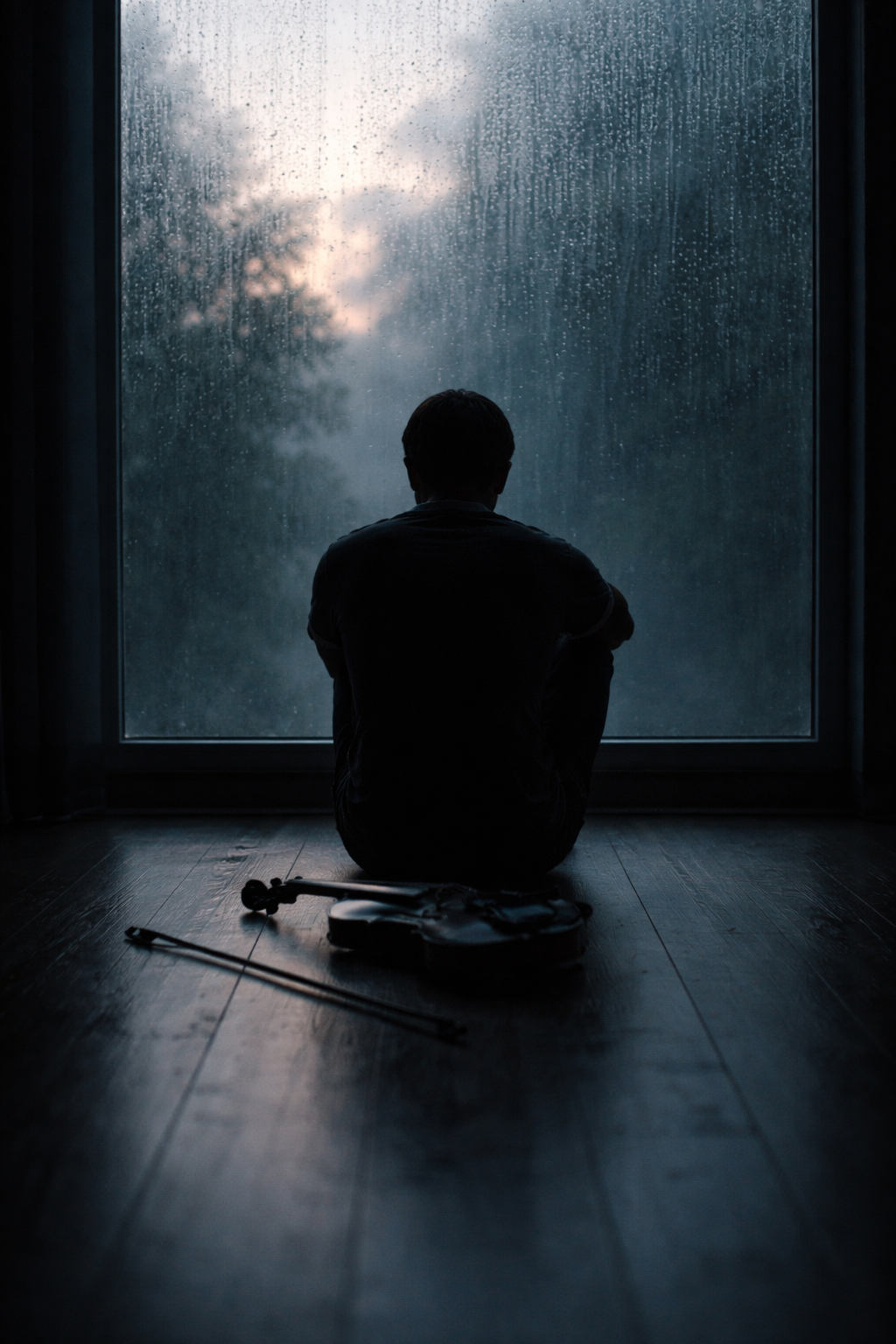
There is a kind of helplessness that feels humiliating.
Not because I am weak but because I am aware, capable, and restrained.
It is the feeling of having words I am not allowed to say. Moves I am choosing not to make. Care I am holding carefully because touching it the wrong way could cause damage.
My hands feel tied, not by lack of power, but by the knowledge that using it would make things worse.
And that hurts in a way few people talk about.
What relational helplessness actually is
Relational helplessness is the state of caring deeply about a relationship that is no longer responsive to effort in the way it once was.
I am not confused about what I could do.
I could:
- Push for clarity
- Demand reassurance
- Force conversations
- Escalate conflict
- Collapse emotionally
- Walk away dramatically
But I don’t because some part of me understands that none of those actions would actually create safety or closeness.
So I stop acting. Not because I don’t care. But because I care enough to notice when action becomes pressure.
That awareness is what makes this state so painful.
How I arrive at the term “relational helplessness”
I don’t arrive at this phrase casually.
I needed language for a specific experience… one that feels too active to be resignation, too restrained to be avoidance, and too painful to be dismissed as patience.
What I am living isn’t learned helplessness in the classic sense.
I’m not giving up. I’m not shutting down. I’m not disengaging from life.
At the same time, I am no longer able to act inside the relationship in ways that once brought closeness or relief. Reaching doesn’t help. Explaining makes things worse. Effort no longer produces safety.
This experience sits at the intersection of several well-established ideas.
In the work of John Gottman, this often appears when a relationship enters negative sentiment override — a state where even neutral or caring actions are received as threatening or intrusive. Repair attempts stop landing. Effort increases tension instead of easing it.
From an attachment lens, especially in the work of Sue Johnson, this is what happens when proximity becomes unsafe but distance feels like loss. Reaching activates threat. Pulling back activates grief.
Regulation has to happen alone.
Therapists sometimes describe this as containment – the choice to regulate yourself because co-regulation is no longer available, and acting would escalate rather than repair.
(Aside: The couples therapist we saw warned me of this as they saw it unfolding. That was both scary and enlightening. It was likely the moment I started practicing restraint. It was also in the same session where I refused to let anger ever show unless warranted – that’s for another day.)
None of these concepts alone fully capture the lived experience.
So I use a composite term — relational helplessness — not as a diagnosis, but as a way to name what it feels like to have agency, awareness, and care, while also knowing that using them would cause harm.
It is the helplessness of restraint, not collapse.
When regulation has to happen alone
When regulation has to happen alone, something fundamental changes.
In a healthy bond, distress is shared. One nervous system helps steady the other. Relief comes not just from insight, but from being met.
Here, that channel is closed.
So every spike of fear, grief, or longing has to be handled internally without reassurance, without correction, without repair landing on the other side.
There is no soft place to put the feeling.
I have to notice it, hold it, metabolize it, and release it while staying in relationship and not letting it spill outward.
That level of self-regulation is possible.
But it is not natural.
And it is not gentle.
Why it feels unbearable
Human beings are wired to repair what feels threatened.
When something precious starts slipping, my nervous system demands movement:
Fix it. Reach. Do something.
Relational helplessness denies that instinct.
I am forced to:
- tolerate ambiguity
- live without feedback
- carry emotional weight without discharge
- hold hope and grief at the same time
There is no clean next step.
No timeline.
No metric for “doing it right.”
So the pain doesn’t spike and release, it lingers.
It seeps into:
- my sleep
- my body
- my concentration
- my sense of self
I don’t get the relief of action. I don’t get the relief of resolution. I just sit in it.
Why restraint feels like self-betrayal
This is the cruel part.
From the inside, restraint can feel indistinguishable from abandoning myself.
I ask:
Am I disappearing? Am I being too passive? At what point does patience become self-erasure?
And I also have to hold a harder truth:
I wasn’t consistently emotionally present in the ways that actually create safety.
When I did show up emotionally, it was often through reactivity, anxiety, urgency and intensity.
I was loud with fear. I was present in distress.
What I wasn’t as present with was calm, curiosity, steadiness, positive emotional attunement and quiet reassurance.
So this restraint now doesn’t just hurt, it confronts me. Because I’m not only sitting with the pain of not being able to act. I’m sitting with the recognition that some of what I’m restraining now is exactly what I relied on before.
That makes this phase more than helpless.
It makes it instructive.
Restraint is not withdrawal
This distinction matters. Withdrawal disconnects to avoid pain. Restraint stays connected while refusing to escalate it. I am not disengaging. I am staying aware, attuned, and regulated without turning my anxiety into pressure.
That distinction is subtle. And it is exhausting.
This distinction between restraint and withdrawal connects closely to what I’ve written elsewhere about the discipline to not require it — staying present without turning need into pressure.
The invisible labour no one sees
There is no praise for this phase.
No one applauds me for:
- staying kind when I feel rejected
- staying steady when I feel untethered
- staying dignified when my insides are screaming
- not turning fear into control
My therapist may.
From the outside, it looks like nothing is happening.
From the inside, everything is happening.
I am regulating myself in the absence of reassurance.
I am choosing not to contaminate the space with panic.
I am absorbing uncertainty so it doesn’t spill outward.
That is not passive.
That is costly.
The most painful part
There is another layer to this that is harder to admit.
I am learning now how to surface the positive emotions I struggled to offer before.
Not the loud ones. Not the reactive ones.
But the quieter forms of presence:
- warmth without urgency
- care without agenda
- steadiness without defense
- affection without fear attached
And I am learning them late or at least later than this relationship may be able to use.
That doesn’t just hurt it introduces a particular kind of grief. The grief of realizing that growth does not move on your timeline. And that insight does not guarantee reception.
I can feel something new becoming available in me and also feel that it may no longer have a place to land. At least here and now.
That tension is brutal.
A necessary reframe
The word helpless is misleading because this isn’t about lack of strength. It is about strength without permission to use it.
When the weight spikes, I repeat this:
“I am not powerless. I am choosing restraint.”
Not because restraint feels good, but because it preserves dignity, safety, and self-respect even while the outcome remains unknown.
Restraint is not surrender. It is leadership under conditions where force would cause harm.
A necessary acknowledgment
I need to say this plainly.
The pain I’m describing here is not the only pain in this story.
My wife is likely carrying her own version of this. Different in shape, different in weight, and shaped by years where my emotional presence was inconsistent, reactive, or unavailable in the ways that mattered most.
Nothing in this reflection is meant to minimize that.
I can hold the reality of my current experience and the reality that I caused harm… not always intentionally, but repeatedly enough for it to matter.
Both truths exist at the same time.
Naming my pain does not erase hers. And acknowledging hers does not invalidate mine.
What this period of my life is asking of me
Not answers. Not certainty. Not resolution.
It asks for:
- patience without a guarantee
- steadiness without validation
- care without reciprocity
- presence without control
I know I’m not the only one living inside this — choosing restraint, regulating alone, learning late — and wondering whether integrity will matter if the timing doesn’t.
I am allowed to hate this phase. I am allowed to say it’s unfair (for everyone and especially my “significant” other who I neglected emotionally).
I am allowed to grieve the loss of influence.
Feeling helpless does not mean I am failing.
It means I am enduring one of the most psychologically demanding positions a person can occupy – loving something I cannot move without breaking it.
Some lessons arrive after they were needed most. That doesn’t make them useless but it does make learning them ache.
And I am still here holding myself inside it.